

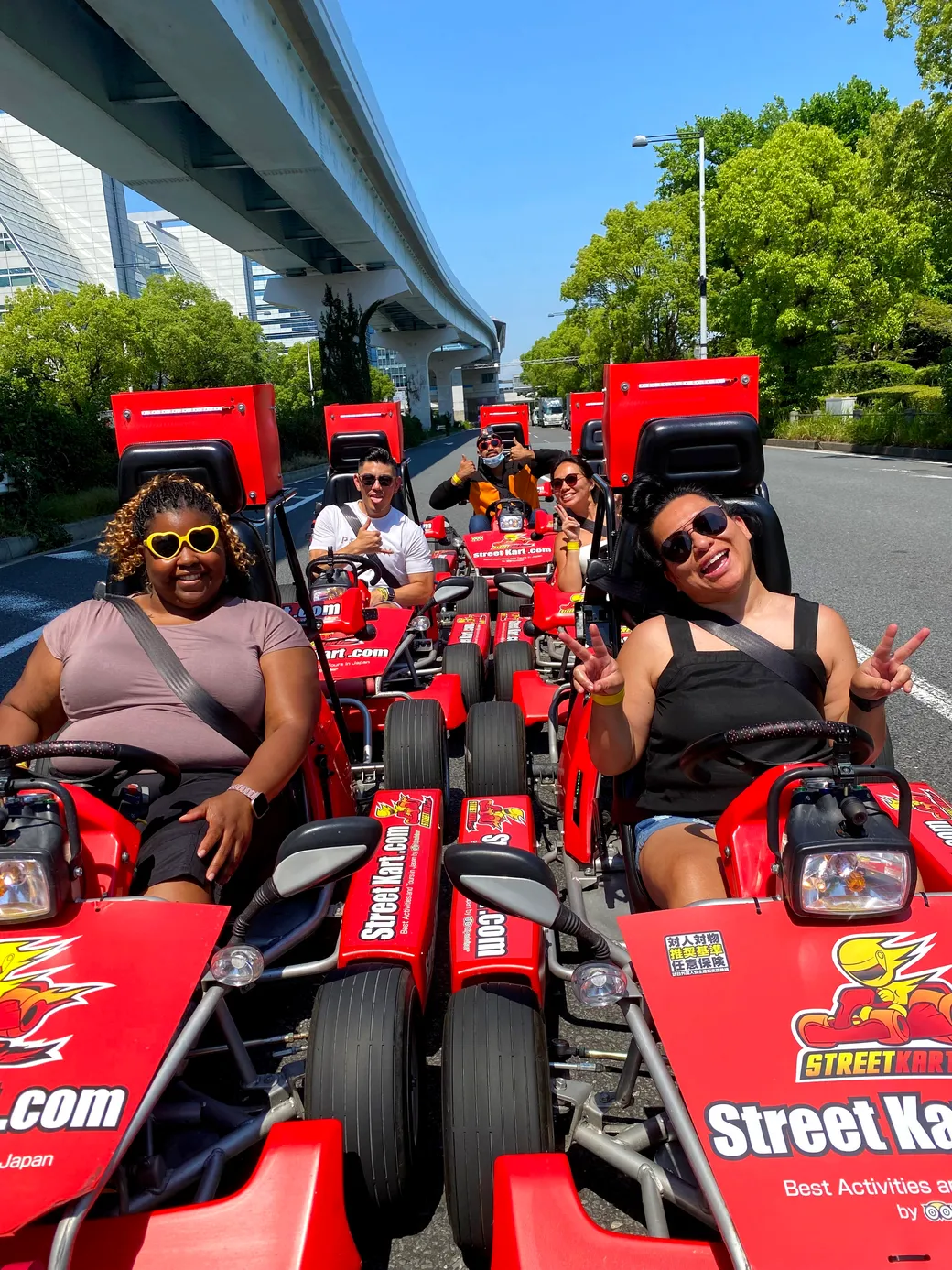
Pairing a Street Kart Experience With a Night of Sushi and Seafood in Shibuya
When people plan a meal in Shibuya, plenty of them think first about sushi and seafood. The buzz around the station, the nighttime air of Dogenzaka, the calm you find when you walk a little toward Shinsen — because of these shifts in atmosphere, what you choose to do before and after a meal can really change the impression of your whole stay in Shibuya. That’s exactly where a Street Kart tour, which lets you take in Shibuya’s streetscape from the public roads, becomes a great option to consider.
Street Kart offers an official guided tour that runs roughly one hour, covering a course that includes central Shibuya, Dogenzaka, the Shibuya Scramble Crossing, Omotesando, and the Harajuku area. Since the posted details may be updated depending on the season or the individual store, we recommend checking the latest information on the Street Kart official site before booking. For anyone who wants to treat their dining time and their experience of the city as one connected whole — building the evening around the Shibuya area as a whole — there’s real value in planning based on official information.
In this article, for those who want to enjoy sushi and seafood in Shibuya, we’ll organize the thinking behind pairing a Street Kart experience before or after your meal. Rather than just listing restaurant names, we’ll consider a comfortable, realistic plan that takes into account Shibuya’s local character, the flow of getting around, and the conditions you can confirm on the official site.
Why Sushi and Seafood Pair So Well With Shibuya
Shibuya is often talked about as a place that sets trends, but when it comes to dining, the city’s character splits in subtle ways. In front of the station, the flow of people is fast, and you’ll spot eateries that are easy to step into even for a short visit. Head toward Dogenzaka from there and the dining options that assume a longer evening stay increase, and move a little closer to Shinsen and it becomes easier to find places where the tone of conversation naturally settles down. For enjoying sushi and seafood, this difference in distance becomes a useful element.
Sushi lets you savor each piece with focus, while seafood lends itself to a wider range — sashimi, grilled dishes, rice bowls, and more. In a city like Shibuya, where these area-by-area differences appear within a short walking radius, it’s easy to start with some light seafood and then move on to sushi. Conversely, if you’d rather settle in and eat at a single place, choosing not only for the convenience of being near the station but also for the quiet you find a short walk away will give your whole evening a more cohesive flow.
Shibuya is also a city open to both tourists and people who use it day to day. Because there’s so much information coming at you from outside, what people want from their dining time varies from person to person. Some want to carry the heat of the lively streets straight into the meal, while others want to switch over to a slightly quieter time once they sit down to eat. Sushi and seafood accommodate both, which makes them genres that pair well with a location like Shibuya.
How to Work the Street Kart Shibuya Course Into Your Dining Plan
On the Shibuya store page of the Street Kart official site, the Shibuya course is described as running “about one hour.” The route explanation introduces a flow that departs from central Shibuya, goes down Dogenzaka, passes through the Shibuya Scramble Crossing, tours the streetscapes of Omotesando and Harajuku, and returns to the store. It’s the kind of content that makes it easy to feel the connections between areas that are hard to grasp on foot alone, all within one continuous stretch of time.
What’s worth keeping in mind here is that Street Kart is offered as an official guided tour. Rather than freely stopping at whatever restaurants you like as you go, the premise is that you experience the booked course as laid out. For that reason, your sushi or seafood plans need to be arranged before or after the tour, not during it. Understanding this premise makes it less likely that your dining plan will run into trouble.
For example, if you’re visiting Shibuya from late afternoon into the evening, you can either eat first or head to a meal after the tour. If you eat first, choosing something you can enjoy at a relatively brisk pace — like a seafood rice bowl or sashimi — gives you breathing room for the trip that follows. If you head to sushi after the tour, the impressions of the city you just saw are still fresh, so conversation at the table tends to open up naturally. Which works better depends on your booking time, your companions’ preferences, and how long you’re staying.
Since Shibuya is an area with a lot of movement, it’s important to estimate travel time, not just the order of meal and experience. The official Street Kart Shibuya store page lists the store’s location as 15-3 Maruyamacho, Shibuya-ku, Tokyo, noting it’s a 3-minute walk from Shinsen Station on the Keio Inokashira Line and a 15-minute walk from JR Shibuya Station. Whether you dine in front of the station or over toward Shinsen changes how easily you can move around before and after the tour.
How to Choose a Sushi or Seafood Restaurant in Shibuya
When looking for sushi or seafood in Shibuya, it becomes easier to choose if you first decide what kind of atmosphere you want at what time of day, rather than going by name recognition alone. If you’re picturing a short visit near the station, ease of entry and quick turnover are good guides. For travelers with limited time, these conditions are practical. They also suit a situation where you just want something light before the tour.
On the other hand, if you want the meal itself to be the centerpiece of the night, it can pair better to walk a bit and move to a calmer area. Especially if you’re choosing a counter-style sushi restaurant, a spot that puts a little distance between you and the surrounding bustle makes it easier to appreciate the differences from one piece to the next. Shibuya gives a strong impression as a station-front city, but once you factor in the Shinsen area, your dining options change considerably.
As for how to enjoy seafood, there’s no need to limit yourself to sushi alone. If you mix in sashimi, grilled fish, small dishes, and seafood rice bowls, you can put together a satisfying lineup even on a short visit. For instance, an order that goes seafood-focused with smaller portions before the tour, then sushi to settle in and finish afterward, feels natural. Conversely, you might savor sushi at a leisurely pace first, then keep the afterglow with something light — drinks or a single dish — after the tour.
What matters is that in a city like Shibuya, you can build your experience to include not just “a single restaurant” but “the flow before and after.” When you add time to feel the city itself, the way Street Kart lets you, the meal stops being a standalone event and starts working as the element that caps off your day in Shibuya.
Usage Conditions to Confirm in the Official Information
If you’re working a Street Kart experience into your plans, one of the most important things among your checklist is the guidance regarding driving qualifications. License requirements differ depending on the documents you hold, so rather than judging from a general explanation alone, we recommend checking the official guidance pages. The places to check are the Street Kart official site as well as the dedicated license guidance page at https://kart.st/en/drivers-license/.
The official pages list the documents required to drive in Japan, such as a Japanese driver’s license, an International Driving Permit based on the 1949 Geneva Convention, a driver’s license with a Japanese translation where applicable, or SOFA-related documents. For license holders from certain countries and regions, there is also guidance noting that a Japanese translation is required. Since the license guidance page explains that which condition applies to you is determined by the type of license or permit you hold, the surest way to confirm whether you qualify is to check that same page.
Also, the Shibuya store page provides guidance on arriving at the store by 30 minutes before your reservation time. After arrival, it lists steps such as confirming your reservation, presenting the valid documents and identification required for driving, filling out a questionnaire, storing your belongings, and a pre-ride briefing. When arranging your schedule, it’s realistic to account not just for the roughly one-hour tour time but also for the reception time before and after.
Furthermore, the Shibuya store page carries a note stating that if you do not bring the required original documents, you cannot participate and will not receive a refund. Since this directly affects your booking and your actions on the day, it’s something you’ll want to confirm before your dining plans. People visiting from overseas can reduce the chance of having to redo things by reviewing their own document requirements at https://kart.st/en/drivers-license/ before departure.
What a Street Kart Experience Adds to the Impression of Shibuya Gourmet
The point of pairing Street Kart with a meal isn’t simply to add a travel element. By seeing areas with distinct characters — the Shibuya Scramble Crossing, Dogenzaka, Omotesando, and Harajuku — in succession, it becomes easier to grasp Shibuya not as scattered points but as a connected whole. When you then step into a sushi or seafood restaurant afterward, the conversation over the meal isn’t limited to the food alone. The lights of the city you just saw, the changing road widths, the flow of people, the atmosphere around the store — all of it lingers at the table as a memory of the night.
This fits with the character of a place like Shibuya. In an area where the city’s energy runs strong, the memory of an experience tends to flow into the dining moment. With food like sushi, where you sense the pause between each bite, the scenery and city impressions you saw beforehand can fill the empty spaces in conversation. The same goes for seafood — just sitting down after passing through a lively street can make the calm inside a restaurant feel that much more distinct.
The Street Kart official site also offers pages in multiple languages, with a layout that makes it easy for visitors from overseas to find information. Since the actual service details, guidance languages, and booking conditions may change depending on the store or season, please make your final confirmation on the Street Kart official site. The fact that you can access information in advance is a helpful point when planning your time in Shibuya.
A Practical Flow for Building Your Shibuya Night Without Strain
If you want to enjoy sushi and seafood in Shibuya while also fitting in a Street Kart experience, there are two arrangements that are easy to picture as comfortable, strain-free plans. One is to have a seafood-focused meal earlier in the day and then head to Street Kart with the reception time factored in. The other is to join the tour first and then settle into a sushi restaurant to cap off the night. The former makes it easier to create a rhythm to your movements, while the latter makes it easier to calmly process the afterglow.
If you start your meal near Shibuya Station, you’ll need to account for the travel time to a restaurant over toward Shinsen. Conversely, if you look for a dining spot around Maruyamacho or near Shinsen from the start, it’s relatively easy to keep your movement before and after Street Kart streamlined. Rather than cramming in too much food-hopping, narrowing your focus to one area and walking it tends to give you a more Shibuya-like density in the end.
It’s also realistic to keep your meal’s content flexible to match your schedule. Before the tour, it’s better to choose something not too heavy and leave the restaurant with time to spare. After the tour, a sushi or seafood restaurant where you can sit down and talk at a relaxed pace makes it easier to look back on the memories of the day. Since the city’s character shifts in Shibuya even over short distances, rather than increasing the number of restaurants, clarifying the role of each one tends to bring more cohesion.
Points to Confirm Before Booking
If you’re considering Street Kart together with Shibuya gourmet, your final point of reference is the Street Kart official site. Please prioritize the official information when checking course times, store guidance, booking availability, and notices. For confirming driving qualifications, we recommend using https://kart.st/en/drivers-license/. Especially for people coming from overseas, or anyone unsure about the type of their International Driving Permit, confirming before booking is important.
A night of enjoying sushi and seafood in Shibuya can stand on its own through restaurant choice alone. But when you add time to experience the city’s scenery first, the impression of the meal becomes a little more three-dimensional. The Street Kart Shibuya course is offered as an official tour that takes in the flow of Shibuya, Dogenzaka, Omotesando, and Harajuku in about one hour. When you want to savor both the food and the streetscape in a single evening, carefully arranging the order before and after makes it easier to create a time that feels distinctly Shibuya. As you proceed with booking and condition checks, please refer to the latest information on the Street Kart official site and the license guidance page.
Our shop does not rent out costumes related to any specific characters or works. We provide only costumes that respect intellectual property rights.
Our shop does not rent out costumes related to Nintendo or “Mario Kart.” We provide only costumes that respect intellectual property rights.
About Costumes
Our shop does not rent out costumes related to Nintendo or “Mario Kart.” We provide only costumes that respect intellectual property rights.
