
How Does Shibuya Change by Time of Day in Peak and Off-Peak Seasons? Planning a Street Kart Outing for a Group of Mixed Ages
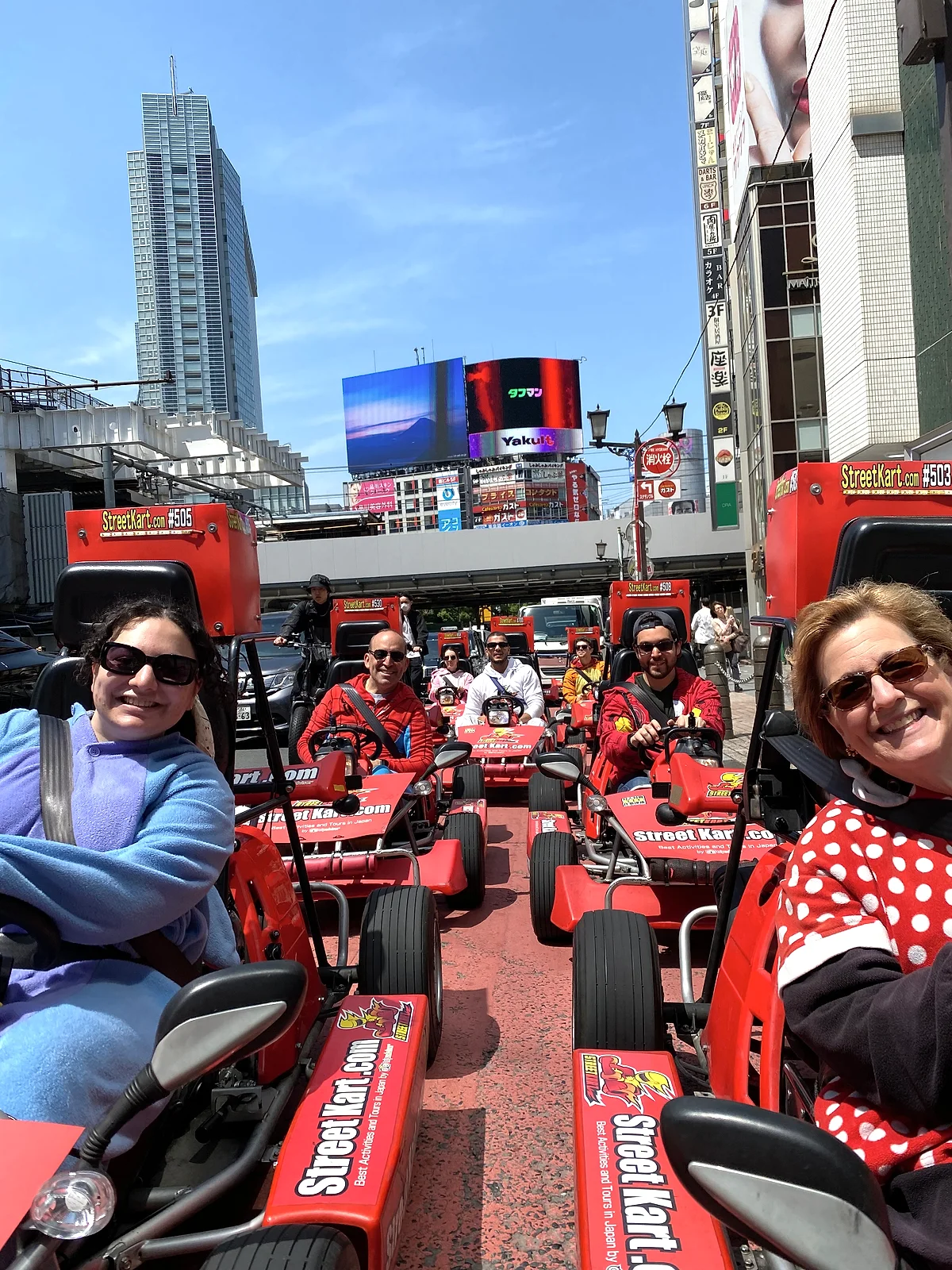
How Does Shibuya Change by Time of Day in Peak and Off-Peak Seasons? Planning a Street Kart Outing for a Group of Mixed Ages
The light at the Scramble Crossing turns green, and people start walking from all four sides at once.
It's the same scene every time. A holiday weekend packed with travelers and a weekday night in winter still feel completely different, the way one song feels different played at another tempo. The calendar alone doesn't decide whether Shibuya is crowded or quiet. The clock matters too. If you're coming to Tokyo with a group whose ages and energy levels vary, knowing this ahead of time will help everyone stay in step.
Peak vs. Off-Peak in Shibuya: The Clock Matters More Than the Calendar
Most people think about peak and off-peak seasons month by month. High season is busy and low season is quiet. Shibuya, though, changes character several times in a single day. Daytime crowds are commuters and shoppers on the move. After sunset, they give way to the energy of people who have come out to enjoy the night.
If you DJ, you know this feeling. On the same dance floor, switching one light can change the whole mood of the crowd. Shibuya does the same thing over the course of a full day.
There's one more thing. The season changes what "the same time of day" looks like. In winter the days are short, and the city takes on its night look while it's still late afternoon. In summer the sky stays bright for longer, so the same hour can still feel like part of the day. December is midsummer in Brazil, but in Tokyo the December air is cold and clear, and the city lights stand out from early in the evening. Both kinds of December are good in their own way.
That's why this article won't name a "best time to go." When the season changes, so does what each time of day means. Instead, it describes what you'll see at different times of day and how each person in your group can spend that time.
Shibuya in Daylight: You See Every Detail, but Plan for the Sun
In daylight, Shibuya almost overwhelms you with things to look at. Colorful signs line the shopfronts on Takeshita Street, and on Omotesando the green of the zelkova trees reflects in the glass of buildings designed by well-known architects. Through a graphic designer's eyes, daytime Shibuya is a "city of color." Pinks, mint greens and the small details of the window displays all stand out sharply in the sunlight.
Daytime is also when conditions change most from season to season. In midsummer, Tokyo can get very hot during the day, and it often stays hot into September. Decide on an indoor place to rest beforehand so that whoever is waiting doesn't end up standing under the blazing sun. If older companions are traveling with you, that one step makes a real difference.
Winter days are the opposite. The sunlight is soft, and many days are just right for walking around the city. "Daytime" means heat in summer and early sunsets in winter. Keep both in mind when you plan, and nobody will be pushed too hard.
Drivers should also dress for the daytime conditions. If you ride on a bright summer day, a hat, sunglasses, sunscreen and something to drink will help. Karts only have room for a small bag, so it's wise to pack light.
Shibuya After the Sun Starts to Set: Light Takes Center Stage
As the sun goes down, Shibuya's rhythm changes. Video screens on building walls, neon signs and traffic signals spill their light across the pavement, and the whole crossing starts to look like a stage. The crowd slowly changes too, from people hurrying past to people stopping to hold up their phones.
For anyone who loves night photography, this is the time to be out. Take your photos before or after the tour, while you're on foot. With so much light around, Shibuya photographs brightly even on a smartphone, but camera shake is easy. Brace your elbow against a wall or railing to steady yourself and your shots will come out much sharper.
The tour also stops at spots for photos. While you're moving, focus on the steering wheel and the guide riding in front of you, and only pick up your camera once you've stopped. Keep those two things separate and you won't end up doing a half-hearted job of both driving and photography.
If you want to plan the order, one option is to watch the city at dusk from Shibuya Sky and then drive through Shibuya after dark. You look down on the crossing from above, then look up at it from street level. You'll go home remembering the same place from two heights.
In winter, the zelkova trees along Omotesando are sometimes lit up for Christmas, and your photos can capture the feel of the season. The dates change from year to year, so check the latest information as your trip gets closer.
Planning Your Time in Peak and Off-Peak Seasons
If your trip falls during a holiday or a long vacation period when travelers crowd in, start with when to book. Street Kart weekends tend to fill up, so once you know which day you want, reserve it early. Getting around also takes longer when it's busy. Leave a bit of "doing nothing" time before and after the experience so the whole group has some breathing room.
Next, decide on the time of day. If you pick daylight hours in peak season, drivers should pack a hat, sunglasses, sunscreen and a drink into a small bag in summer, and arrive at the shop 15 minutes early. People who are waiting should choose an indoor place in advance, such as Shibuya Hikarie with its shops and restaurants, so they aren't standing in the heat. If you pick after sunset in peak season, the whole group could watch the crossing at dusk from Shibuya Sky in Shibuya Scramble Square, then head to the shop. Both are about a 10-minute walk from the Shibuya shop. People who are waiting can see the drivers off and then go to the place they chose.
Weekends tend to fill up even in the off-peak season, so it helps to keep several possible dates in mind, including weekdays. Availability varies by day, so don't count on just one. If you pick daylight hours, this is the waiting group's chance to enjoy the city slowly: take a photo at the Hachiko statue, or wander around Center Gai and Spain-zaka with no particular plan. Winter days are short, so the city may already have its night look by the time you meet up again. If you pick after sunset, winter nights can get cold, so drivers should bring a jacket suited to the season. Rather than walking around, people who are waiting can plan to wait somewhere indoors, like a café.
Weather is also worth building into your seasonal plans. In light to moderate rain, tours go ahead as scheduled and raincoats are provided free of charge. Tours are canceled in heavy rain or typhoons, and you can choose to join a shortened tour and get a refund for the difference, move to another day, or cancel for a full refund. Longer courses may also be shortened. If you're traveling during the rainy season or typhoon season, keeping one spare day free will save you from rushing.
What to wear also depends on the time of year. Winter nights can be colder than you'd expect, so bring a jacket suited to the season. Whatever the season, closed-toe shoes are recommended, ideally sneakers. Avoid sandals, heels, skirts and dresses, and it's best to leave expensive clothes you don't want to get dirty at home for the day. Check the official website for guidance on what to wear.
Making It Work for a Group with Mixed Ages and Energy Levels
This may be the most important part.
First, karts are single-seaters and you can't ride as a passenger. There are requirements for driving, and which driver's licenses are accepted depends on the country and the document. Don't decide for yourself whether you can take part. Check the driver's license information on the official website. The official website is also the authority on the finer details of participation requirements, including age. Please see the official website for details.
If someone in your group is pregnant, driving is not recommended. The karts have no suspension, so every bump in the road goes straight through to your body. If you're unsure, talk to a doctor before your trip. There are no weight or height limits, but the engines are small, so larger drivers may find it harder to pick up speed.
With all that in mind, the key to planning is this: not everyone has to drive. While the people who want to drive are out on the tour, everyone else can spend time nearby at their own pace. Starbucks Shibuya Tsutaya is about an 8-minute walk from the Shibuya shop, and Blue Bottle Coffee Shibuya is about 10 minutes away. Anyone who doesn't mind walking could also go shopping at LOFT Shibuya or Shibuya PARCO. When the tour ends, meet up at the place you agreed on. Nobody gets left behind.
It's best to sort out the meeting plan before the tour starts. Drivers need to be at the shop 15 minutes early for check-in and the safety briefing. If the people waiting come to the shop too, see everyone off and only then split up, the whole group will have seen with their own eyes where to come back to.
If some members still have energy to spare, they could go on to Meiji Jingu after the experience. It's about a 20-minute walk from the Shibuya shop, and its sacred forest feels a world away from central Tokyo. Tired members can wait at a café while the energetic ones walk through the forest. Meiji Jingu is known for blessings for good relationships and family well-being, and the Kiyomasa Well is on the grounds. Younger members might enjoy walking down Takeshita Street with a crepe in hand, a very Shibuya way to pass the time. If you're hungry after you meet up, there are enough choices to leave you torn: Dogenzaka Ramen Yokocho, Ichiran Shibuya, Shibuya Niku Yokocho and more.
When Brazilians travel, there's a strong feeling that the fun comes from everyone doing everything together. In Tokyo, though, it can be nice to spend some time apart on purpose and then ask each other, "So what did you get up to?" An American friend of mine said they liked that the people waiting had something to enjoy too.
A note on language as well. On the day of the tour, guidance is mainly in English. Guidance in Japanese or other languages depends on the staff working that day, so it can't be guaranteed. If a driver isn't confident in English, contact the shop through the official website beforehand. Beyond that, speak slowly, use gestures and answer with a smile. Even without perfect language, you'd be surprised how far that gets you.
There's a restroom inside the shop. Say something before the tour and have everyone stop by. If older companions are with you, that small bit of care is just right.
The Shibuya shop has no parking, and public transportation is recommended. It's about a 10-minute walk from JR Shibuya Station and about a 5-minute walk from Shinsen Station on the Keio Inokashira Line. If someone in your group would like to walk as little as possible, Shinsen Station is a good option. The shop has lockers for small items, but they aren't suitable for large luggage like suitcases. If you're booking on a day when you change hotels, plan to drop off your large luggage first.
What Makes Street Kart Appealing
First, a guide leads the way. On the tour you drive behind a guide, and every tour has a trained guide. In an unfamiliar city, simply having someone riding ahead of you is reassuring. All vehicles get a safety inspection before departure, and the guide and participants stay in contact during the ride. When the group stops, the guide may also tell you about the area.
Second, the routes include Shibuya's iconic spots. Tours from the Shibuya shop include courses through the Scramble Crossing, Omotesando and Harajuku: the crossing where streams of people meet, Harajuku with its kawaii culture, and Omotesando with its zelkova-lined avenue. Each neighborhood has its own character, and from the kart they link together into one continuous line. Please see the official website for course details.
Third, there's the feeling of the ride itself. With your hands on the wheel, the angle you look up at the buildings from feels different from usual. The wind hits your face, and the buzz of the crossing and the music of the streets pour straight into your ears. You take in the season's air with your whole body, and the humid summer night breeze and the cold, clear winter air each become a memory of their own.
Fourth, there's the language support. The official website is available in 22 languages. On the day of the tour, however, guidance is mainly in English, and other languages depend on the staff that day. It's best to think of what you can read on the website and the language of the guidance on the day as two separate things.
Fifth, there's the track record. As of November 2023, across all locations combined, there had been more than 150,000 tours, more than 1.34 million customers and more than 20,000 reviews, with an average rating of 4.9 out of 5. These figures are from that date. Even so, they show how many people have driven through Japan's cities on these tours.
Sixth, you can use Shibuya as your base. Street Kart has 9 locations across Japan, 7 of them in Tokyo. In Shibuya there are the Shibuya shop and Shibuya Annex, which are in almost the same spot. Cafés and shopping centers line the surrounding area, so both drivers and the people waiting have plenty of ways to spend their time.
What to Check Before You Book
In Shibuya, peak and off-peak depend on the season and the time of day together. In busy periods, book early and decide on an indoor place to wait. In quieter periods, leave room for a slow walk around the city. The same time of day shows you a different scene in winter and in summer. Choose your time slot based on the season of your trip and how each person in your group wants to spend their time.
Please check the official website for operational details such as departure time slots. Prices vary by season and time of day, so check the official website (kart.st) for current pricing. It's also worth confirming what to bring when you book. You need your original paper driver's license; digital licenses are not accepted. If you don't have the required documents on the day, you won't be able to take part and you won't get a refund. Don't forget your passport and your booking confirmation email or booking number either. Cancellations are free up to 7 days in advance. Bookings are accepted via Facebook, LINE and email, and the contact details are on the official website. Weekends tend to fill up, so once your dates are taking shape, start by asking about availability.
The people who drove and the people who waited at the café. When you meet up again in Shibuya at night, everyone will have their own stories to tell.
This article was originally written in Japanese and translated using AI. Some expressions may read unnaturally, and we appreciate your understanding. For the most accurate and up-to-date information, please refer to the official site at kart.st.
Street Kart is not affiliated with Nintendo or the Mario Kart series in any way. We do not provide costumes of Nintendo characters, and such costumes may not be worn during tours even if brought by participants.